Basic Techniques Crash Course
Four techniques that cover ninety percent of miniature painting
~5 min read
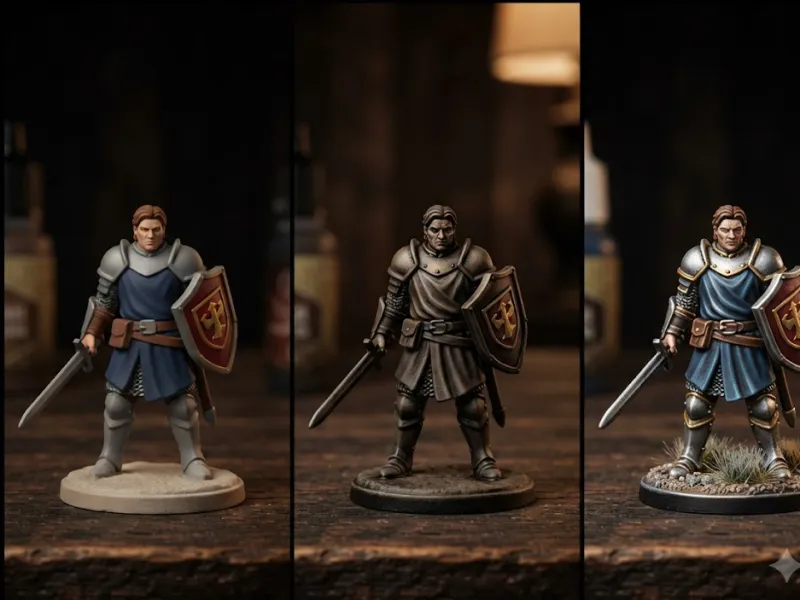
The Core Four
You could spend years learning advanced techniques, but four fundamental skills will carry you through the vast majority of miniature painting. Master these and you can paint any model to a solid tabletop standard. They are: basecoating (thin your paint), washing (instant shadows), drybrushing (easy highlights), and edge highlighting (clean definition). Each builds on the one before it.
Basecoating — Thin Your Paints
The golden rule of miniature painting. Put a small amount of paint on your palette, thin it with a drop of water until it flows like milk, and apply two or three thin coats rather than one thick coat. Each thin coat adds color density while preserving the sculpted details underneath. Thick paint obscures detail, looks lumpy, and takes longer to dry. Two thin coats always beats one thick one.
Washing — Liquid Talent
Shade paints (washes) are thin, dark, translucent paints that flow into recesses through capillary action. Apply a wash over your basecoated model and it instantly creates shadows in every crack, crevice, and fold. It's often called "liquid talent" because it makes any model look ten times better with almost zero effort. Apply it generously, guide it into recesses with your brush, and let it dry completely.
Drybrushing — Easy Highlights
Load a brush with a lighter color, wipe almost all the paint off on a paper towel, then lightly drag the nearly-dry brush across raised surfaces. The tiny amount of remaining paint catches only the highest points, creating highlights. It's fast, forgiving, and especially effective on textured surfaces like fur, stone, chainmail, and terrain. Use an old brush — drybrushing is rough on bristles.
Edge Highlighting — Clean Definition
Using a fine brush and a lighter color, paint thin lines along the sharp edges and corners of the model. This simulates how light catches raised edges and makes the model look sharply defined from tabletop distance. Turn the brush sideways and drag it along the edge, letting only the side of the tip touch. It takes practice, but even imperfect edge highlights make armor and hard surfaces pop.
These four techniques in sequence — basecoat, wash, drybrush, edge highlight — form a complete painting recipe that works on virtually any model. You can explore our technique library for in-depth guides on each one.
You don't need to master all four at once. Start with basecoating and washing — those two alone will get you surprisingly good results. Add drybrushing when you're comfortable, then tackle edge highlighting when you're ready for a challenge.
Sign in to track your progress